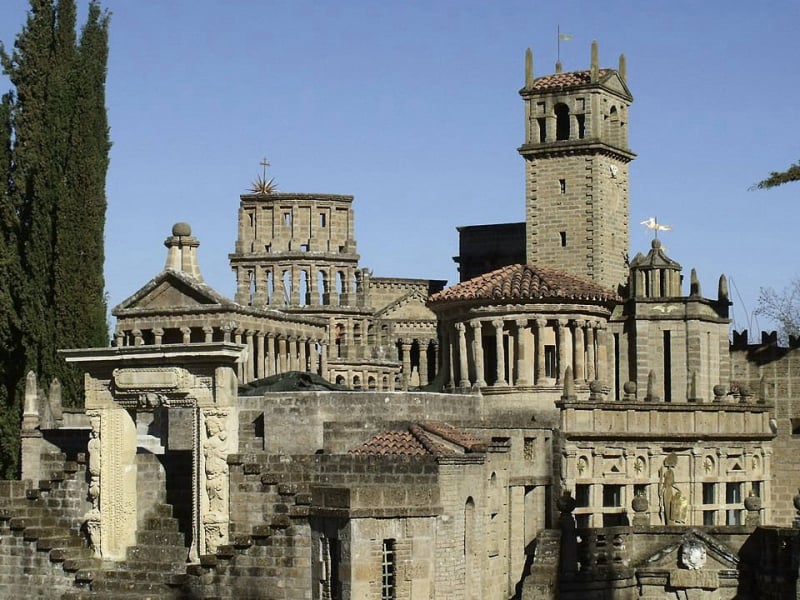
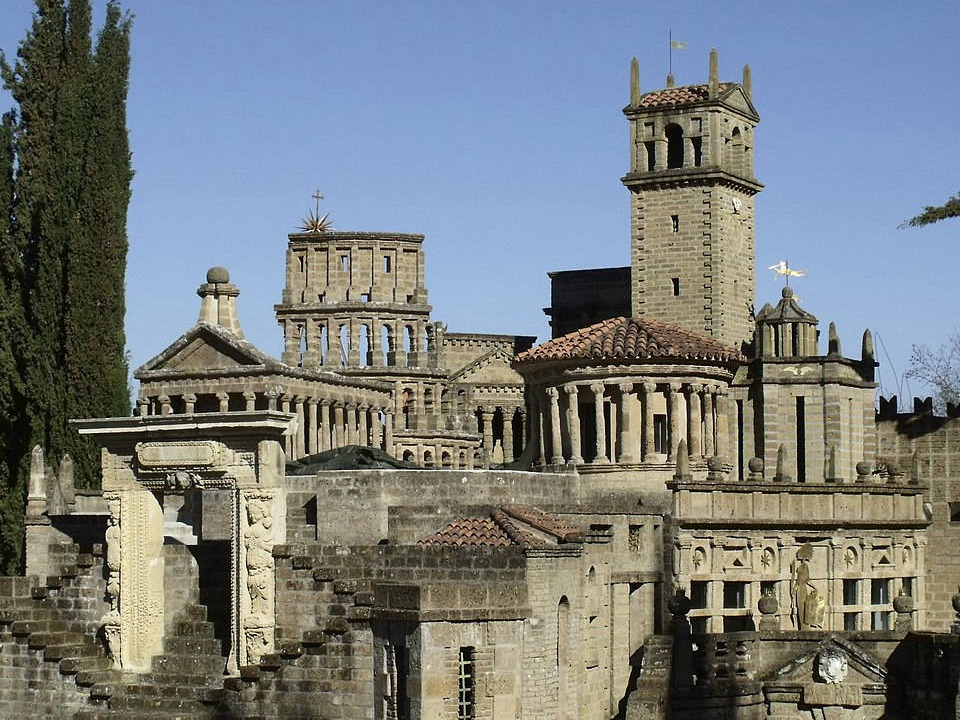
La Scarzuola is an architectural complex in Umbria, located in Montegiove hamlet in the comune of Montegabbione, Terni Province. It was originally the site of a 13th Century convent associated with St. Francis of Assisi, but was partially abandoned in the 19th Century.
In 1957, the Milanese architect Tomaso Buzzi purchased the convent site and converted it into a multi-faceted architectural complex mainly built with the remains of the convent. Buzzi built the complex as his interpretation of the ideal city.
A visit to La Scarzuola is highly recommended, but you have to make a reservation in advance as it is a private home.
You can make reservation through this reservation website.
You can find pictures and directions at the bottom of this page.
Link to Wikipedia article on La Scarzuola.
VISITING LA SCARZUOLA
Practical Information
Despite its elaborate grandeur, La Scarzuola is not a typical public monument – it remains a privately managed site, and visiting requires a bit of planning. Here is what you need to know to organize a visit:
Location and Access
La Scarzuola is located near the hamlet of Montegióve in the comune of Montegabbione, Province of Terni, Umbria. It sits in a remote hilltop area of rural Umbria (the region is often called the “green heart of Italy”), roughly 60 km from the city of Orvieto. Reaching La Scarzuola almost exclusively requires a car – there is no convenient public transportation to the site . The nearest train stations (such as Orvieto or Chiusi) and major roads are quite far, and the last 2 km to the property are via an unpaved country road. Visitors should plan their route in advance (using GPS or maps) and allow extra time to navigate the winding roads. Ample parking is available near the entrance gate of the estate. (Tip: The turn-off to La Scarzuola is not heavily signposted; many travelers recommend using Google Maps and watching for the “Scarzuola” signs around Montegiove. Drive slowly on the gravel road and be prepared for some bumps.)
Tours and Booking
“There is no other way to visit Scarzuola” except by guided tour – this phrase is often emphasized in guidebooks, and it’s true . The site can only be visited by appointment on a guided tour . You must reserve in advance (same-day or drop-in visits are not allowed, as the gates stay closed outside tour hours). To book a tour, visitors should contact La Scarzuola through the official website or email/phone. Typically, you will propose a date and time; the staff (often Marco Solari himself or an assistant) will confirm a slot or suggest joining an existing group. A minimum group size is usually required to run a tour – officially about 8 persons (some sources say 10) – but individual travelers can often be accommodated by joining other groups or by special arrangement . If you are a small party (1–4 people), don’t be discouraged – reach out with your available dates, and they may slot you into a larger tour. Tours are available most days of the year, but keep in mind that they are at set times (often one in the late morning and one in the afternoon on weekends). Punctuality is crucial – the gate is typically opened only at the exact tour start time, and latecomers might miss their chance to enter . It’s wise to arrive at least 15 minutes early near the gate.
Tour Experience
A standard tour of La Scarzuola lasts around 1.5 hours . The tour is a walking route through the gardens and structures, beginning at the old convent area and proceeding up through the “ideal city.” Expect to be on your feet the whole time, climbing some stairs and uneven pathways as you go. The tour is guided by the on-site experts – most famously by Marco Solari, Buzzi’s nephew and the estate’s owner, or occasionally by an English-speaking guide (such as a long-time resident expat) for non-Italian groups . Tours are primarily conducted in Italian by default . Solari, now an older gentleman, is known for his passionate and theatrical storytelling as he leads visitors through each section . If you do not understand Italian, you might still enjoy his expressive style, but it’s recommended to request an English tour in advance if available. In recent years, English-language tours have been offered (for example, on certain dates an English-speaking guide like “Brian” might conduct the tour for foreign visitors) . When booking, indicate your language preference; if no English guide is available, you might be provided an explanatory pamphlet or simply encouraged to enjoy the visuals. Photography is allowed (even encouraged) during the tour – feel free to take pictures of the architecture and scenery for personal use. The guide will stop at key points to explain features, and there is usually time at the end to ask questions. Remember that the convent church itself is generally not open to tourists (it’s used for storage/maintenance), so the focus of the tour will be on the gardens and Buzzi’s city .
Tickets and Payment
Visiting La Scarzuola is relatively inexpensive. As of 2024, the guided tour fee is about €10 per person, paid in cash upon entry . There is no ticket office or formal cashier – typically, the guide or caretaker will collect the fee (have exact change in euros if possible). This fee supports the maintenance of the property. No other tickets are required (the tour fee covers everything). If you book as part of a larger group through a travel agency or hotel, confirm whether the fee is included or if you pay on-site. Note: Because it is a private site, there are no concessions like museum passes or free entry days – all visits must be paid and guided.
Visitor Experience and Tips
A trip to La Scarzuola is a unique and memorable adventure. Here are some tips and insights to make the most of your visit:
Atmosphere
Prepare to be amazed by the atmosphere at La Scarzuola – it truly feels like stepping “not so much into a Catholic monastery as into a surrealistic world” out of a dream . The complex is enveloped by tall cypress trees and set amid rolling green hills, giving it a secluded, almost monastic calm. Within the high walls, however, the vibe is whimsical and fantastical: you’ll wander through courtyards with giant eyes and mythic statues peering at you, and amphitheaters painted with suns and moons. Many visitors compare the experience to Alice’s Wonderland or a Dalí painting – bizarre, thought-provoking, and unlike anything else in Italy. Despite the initial impression of chaos, there’s a strange harmony between the architecture and the nature around it (birds and cicadas provide a gentle soundtrack). Take a moment during the tour to soak in the surroundings: the reflection of ruins in the pond, the scent of ivy and stone, and the play of light and shadow on the intricate facades. La Scarzuola is often quiet except for the guide’s narration, so it can feel at times like time stands still inside this enchanted “city”.
When to Visit
La Scarzuola is open to visitors year-round by appointment . The best times to go are spring (April-May) and autumn (September-October), when the weather in Umbria is mild and the countryside is at its greenest. In spring, wildflowers and blooming shrubs around the property add color to the scenery, and temperatures are comfortable for the outdoor tour (around 15–20°C). Fall brings golden light and often a backdrop of autumn foliage on distant hills. Summer visits are also possible (the estate can look stunning in the bright sun), but note that Umbria can get quite hot in July–August – tours in the middle of a hot day might be tiring, and there is limited shade once you’re walking the stone structures. If visiting in summer, try to book a morning tour (or late afternoon) to avoid peak heat, wear a hat, and carry water. In winter, tours still run, but keep in mind it can be cold and damp (sometimes the area sees mist or light rain). The upside of an off-season winter visit is that crowds will be very small – sometimes you might even get a virtually private tour if few people booked that day. Just be ready for mud or slippery steps if it has rained. Whenever you go, remember that Umbria’s weather can be unpredictable; dressing in layers is a good idea.
Preparation (Know Before You Go)
Because La Scarzuola’s tour is heavy on symbolism and usually conducted in Italian, a bit of preparation can greatly enrich your experience. Consider reading a brief background on the site (like this guide or the official website) before you arrive, so you are familiar with the key concepts and can spot details during the tour. If you do not speak Italian and no English tour is available, you might want to learn a few key terms (for example “teatri” for theaters, “torre” for tower, “Madre” for mother, etc.) or even bring along a printout of an English description for reference. That said, many visitors have enjoyed the tour even without understanding every word – Marco Solari’s enthusiastic and animated storytelling transcends language barriers . The guide often uses dramatic gestures, changes in tone, and even humor to convey meaning, so you will likely pick up the gist of things. Still, to truly catch the nuances (and there are many), some prior knowledge or a translation can help. Don’t expect informational placards or signs on site – the experience is 100% oral history and personal interpretation by the guide. Lastly, make a reservation well in advance, especially if you are on a tight travel schedule. It’s not uncommon for tours (especially weekend slots) to be fully booked with group visits, so emailing a couple of weeks ahead is wise. Once you have a confirmed appointment, be sure to note the exact time and plan your travel so you arrive punctually (aim to be at the gate a little early, as mentioned). If for any reason you need to cancel or are running late, inform the management by phone – courtesy is appreciated since they may hold the tour for a few minutes if they know someone is en route.
What to Wear/Bring
Visiting La Scarzuola is like a moderate hike combined with an outdoor museum tour. Wear comfortable walking shoes with good grip – you will be walking on uneven old stone steps, grass, and gravel. Avoid heels or smooth soles. Dress comfortably and according to the weather (light, breathable clothes in summer; a jacket in cooler seasons). There is no dress code as it’s not an active religious site, but respectful casual attire is fine. Consider bringing a bottle of water, especially in warm weather or if you tend to get thirsty – there are no cafes or vending machines on site, and the tour is 90 minutes with no refreshment break. A sunhat and sunscreen are recommended in summer since parts of the tour are in direct sun. Conversely, an umbrella or rain jacket is smart if rain is forecast (the tour will generally proceed in light rain). Photography is allowed, so bring a camera or make sure your phone is charged (the surreal vistas are highly photogenic!). However, drone photography is not permitted and would be impractical during a guided tour with others present. Also, note that there are no restrooms available for visitor use on the property (the site is relatively rustic in terms of facilities), so plan accordingly before you arrive.
During the Tour
As a guest in this “outdoor theater,” it’s best to keep an open mind and embrace the experience. The guide may engage in light-hearted banter or provocative jokes – for instance, Marco Solari is known for his eccentric humor and might teasingly instruct visitors to “go to hell” as they enter the Mouth of Hell (all in good spirit, referencing the architecture) . Don’t be alarmed; it’s part of the show. In fact, Solari’s sometimes irreverent commentary is what gives the tour much of its character. Feel free to laugh and enjoy the theatricality of it. That said, listen closely to the explanations (or watch closely, if you don’t understand the language) – there are countless details being pointed out that you might miss otherwise. It’s polite to stay with the group and not wander off, both out of respect and because it’s easy to get disoriented among the structures. If you have questions, save them for pauses or the end; Solari (or the guide) will typically take time for Q&A once the main circuit is done. Be respectful when walking on old steps or leaning on walls – although robust, the structures are historic/Artistic heritage. Lastly, enjoy the moment. La Scarzuola is a place that engages the psyche as much as the eyes. Many visitors come away not only with great photos but with a sense of having experienced something profound and introspective. Give yourself a little time after the tour (perhaps sitting in your car or under a tree outside) to digest what you saw and felt.
Who Can Enjoy
While virtually any architecture or art lover will be enthralled by La Scarzuola, it’s worth noting that the content skews adult in theme. Children are not forbidden, but young kids might find the 90-minute tour and abstract concepts tedious or confusing. There are also some sculptures with nudity (the Great Mother) and dark imagery (the monster mouth) that prudish parents might find awkward for kids – indeed, one visitor was seen covering her child’s eyes in front of the giant female statue . Teenagers with an interest in fantasy or history could enjoy it, but small children may be better off sitting this one out. The terrain is also not stroller-friendly. In short, La Scarzuola is ideal for adults who appreciate art, architecture, or offbeat attractions, and for those who don’t mind a bit of walking and a lot of symbolism. It’s a fantastic addition to an Umbrian itinerary for travelers seeking something beyond the usual churches and museums.
Visiting La Scarzuola is truly like taking a journey into the mind of a genius (or madman, as some say). It combines the serenity of an Umbrian monastery with the wild creativity of a surrealist art installation. You’ll leave with plenty to ponder – about the line between dreams and reality, about the layers of history and imagination, and about the life of the eccentric Tomaso Buzzi who dared to build his own ideal world here. As you depart through the gates and return to the “real world” of modern Italy, don’t be surprised if the memories of La Scarzuola linger in your mind like a vivid, slightly fantastical dream. It is, after all, a place “where, nevertheless, everything is possible” – to borrow Buzzi’s motto – and experiencing it is a unique adventure you won’t soon forget .
Use a GPS to guide you as there were no signs at the sideroad leading up to La Scarzuola.
The last couple of kilometers of road leading up to the monastery is a gravel road, so drive carefully.