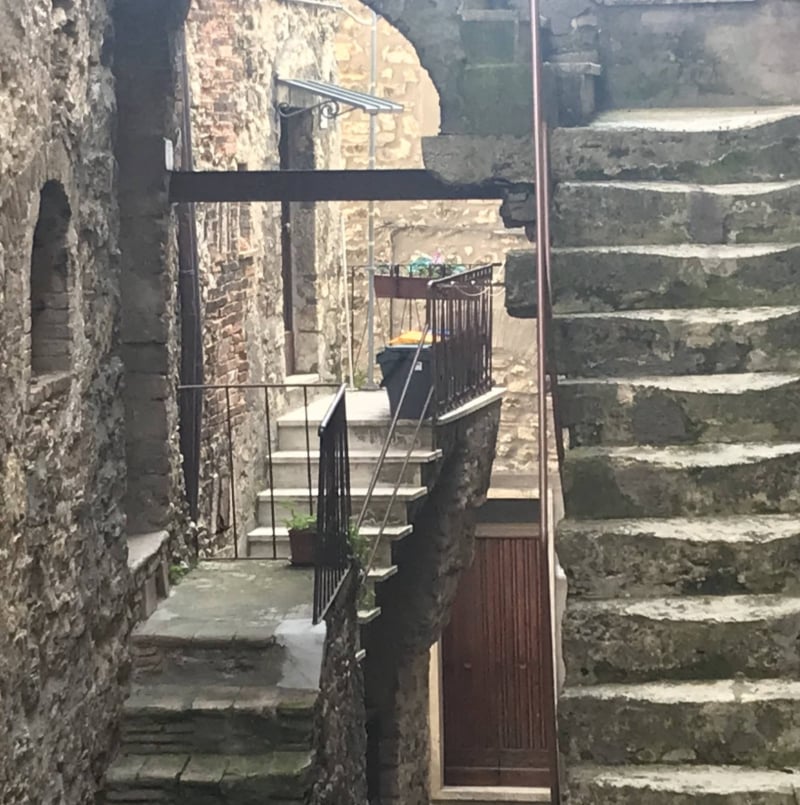
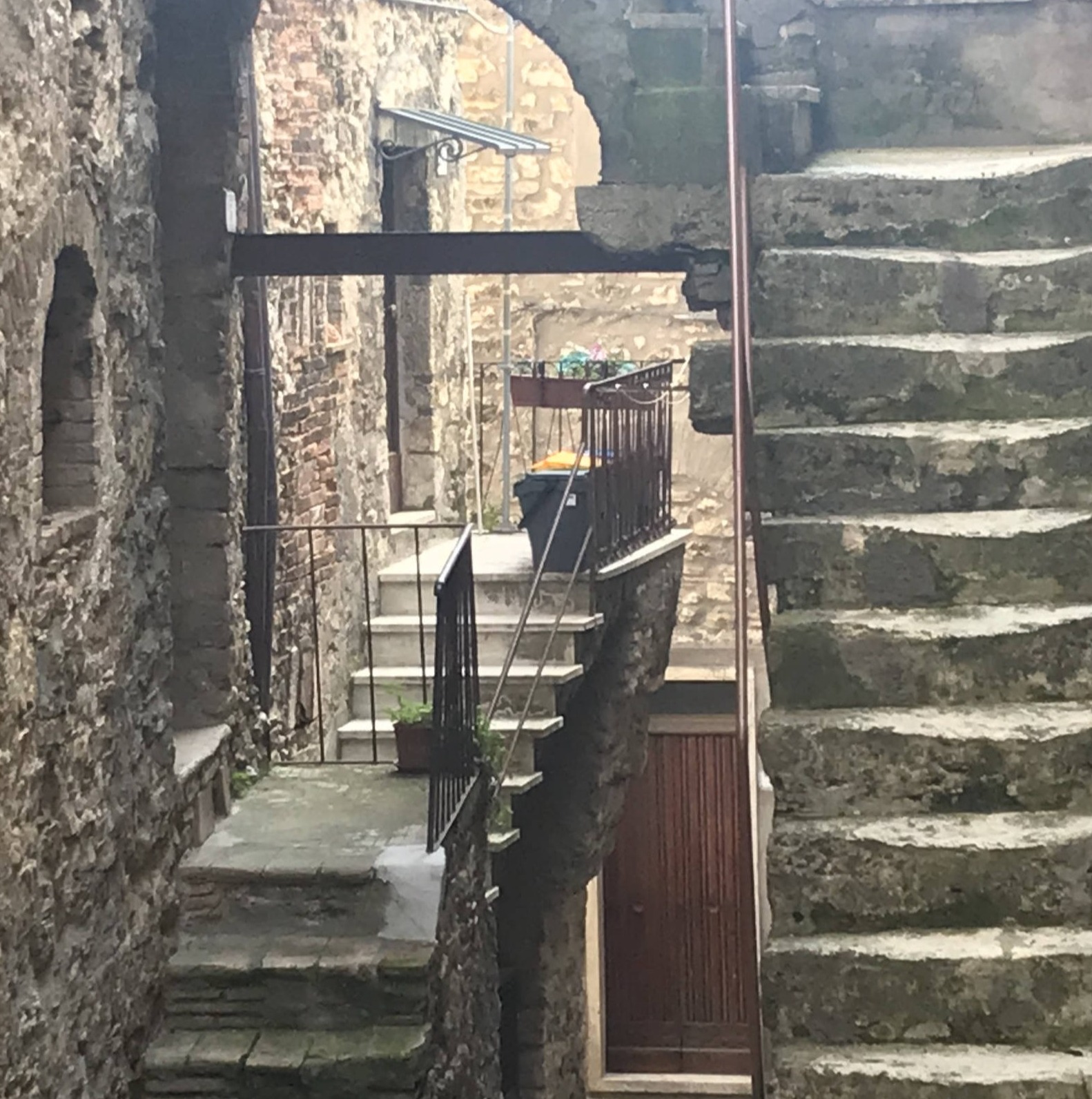
The old medieval part of the town of Montecchio is idyllic and is a nice example of a traditional mountain town in Umbria.
The narrow streets and houses woven into each other to fit as many as possible within the city walls leaves a network of staircases and overpasses.
When you are there then take a break at the bar on the central square, just outside the old center, or visit one of the restaurants in town.
You can find pictures and directions at the bottom of this page.
Set among the rolling hills and olive groves of central Italy, Montecchio is a charming medieval town in the region of Umbria, near the province of Terni. With its panoramic views of the Tiber Valley and its stone-built houses clustered around a historic core, Montecchio offers an authentic glimpse into rural Italian life. Though small in size, the town’s history is long and layered, shaped by Etruscan roots, medieval fortifications, agricultural tradition, and a deep connection to the Umbrian landscape.
Early History and Etruscan Foundations
The area surrounding Montecchio has been inhabited since ancient times. Archaeological evidence suggests that the Etruscans, who thrived in central Italy from the 8th to the 3rd century BCE, had a strong presence in this part of Umbria. Just a few kilometers from the town, Etruscan tombs and remnants of settlements have been uncovered, indicating that the region was once a vital part of the Etruscan world, particularly due to its proximity to the Tiber River, which served as an important trade route.
Although Montecchio itself does not appear in ancient Etruscan records, the continuity of settlement in the area suggests that it emerged organically from earlier villages and hilltop sanctuaries, as was common throughout the Umbrian countryside.
Medieval Origins and Strategic Importance
The first documented reference to Montecchio dates to the 10th century, when it appears in records as a fortified settlement. Like many Umbrian hill towns, Montecchio developed during a time of political instability and frequent conflict between local lords, religious authorities, and emerging communes. Built on a small hilltop, the town was strategically located to control the surrounding valleys and protect the road networks connecting Orvieto, Todi, and Amelia.
During the Middle Ages, Montecchio was part of a network of castle towns (castelli) that dotted the Umbrian landscape. Its narrow streets, arched gates, and defensive walls were designed not only for community life but also for protection against raids and sieges. The town likely fell under the influence of powerful neighboring cities like Orvieto and Todi, both of which sought to control this fertile and strategic territory.
Montecchio’s fortifications were reinforced during the 13th and 14th centuries, a period when the town served both military and agricultural purposes. The medieval tower still standing in the town today is a reminder of this era—a symbol of vigilance and strength.
Religious and Cultural Life
As in much of Italy, religion played a central role in Montecchio’s development. Small churches and chapels, some of which still exist, were built in and around the town during the medieval and Renaissance periods. These included the Church of San Donnino, dedicated to the town’s patron saint, which remains an important religious and cultural center for local festivities and traditions.
The presence of religious institutions helped solidify Montecchio’s position as a stable community. Monasteries and priests not only tended to the spiritual needs of the people but also preserved records, administered charity, and provided basic education.
Agricultural Tradition and Olive Oil
While Montecchio never became a major urban center, its long-term importance is tied to the land itself. The surrounding hills are particularly well-suited to the cultivation of olive trees, and over the centuries, the town developed a reputation for producing high-quality olive oil.
To this day, Montecchio is part of the Umbrian DOP (Protected Designation of Origin) region for olive oil, and local producers follow centuries-old methods to press extra virgin olive oil of remarkable purity and flavor. This tradition is not only an economic asset but also a cultural one—harvest festivals, tastings, and olive-themed events connect the community to its past and to the land.
Viticulture and small-scale farming have also played roles in the local economy. The landscape around Montecchio is a patchwork of fields, vineyards, and forests, reflecting a way of life that has remained remarkably stable despite the changes of modernity.
Modern Era and Preservation
In the 20th century, like many rural towns in Umbria, Montecchio experienced population decline as residents moved to cities for work and education. However, it has avoided large-scale development and retains much of its medieval character. Its cobbled streets, stone houses, and intact historical core have made it an appealing destination for those seeking an authentic Italian experience.
In recent years, Montecchio has attracted visitors interested in slow tourism, agritourism, and heritage travel. The town offers not just historical interest but also a peaceful retreat from the crowds of more famous destinations. Local festivals, traditional cuisine, and community events help preserve the town’s unique character.
Moreover, the nearby countryside is rich with archaeological sites, nature trails, and historic villas, making Montecchio an ideal base for exploring the lesser-known treasures of Umbria.
Cultural Significance
Though Montecchio may not appear in most guidebooks, it represents something profoundly important in Italian culture: continuity. It is a place where ancient history, medieval resilience, and rural tradition coexist in harmony. The town embodies the spirit of Umbria itself—a region known for its unspoiled beauty, historical depth, and strong sense of identity.
Montecchio’s significance lies not in grand monuments or famous battles, but in its quiet endurance. It tells the story of a community rooted in the land, adapting through centuries, and preserving a way of life that modernity has not erased.
Conclusion
Montecchio is more than a dot on the map of Umbria—it is a microcosm of Italian rural heritage. From its Etruscan echoes to its medieval walls, from its olive oil traditions to its peaceful present, the town offers a rich and layered experience. For the curious traveler or thoughtful historian, Montecchio stands as a reminder that history lives not only in grand cities, but also in the quiet rhythms of small, enduring places.
The map below shows the location of the city of Montecchio.